First Signs of Cataracts in Sydney? A Step-by-Step Guide
Recognising the First Signs of Cataracts: A Guide for Sydney Patients
If you have started noticing blurred or cloudy vision, you may be wondering whether you are seeing the first signs of cataracts. Cataracts are common and usually develop slowly, and the good news is that they are highly treatable once diagnosed.
This simple three-step guide walks you from the early signs to getting an Optometrist referral for cataracts in Sydney, through to booking your specialist visit at The Cataract Clinic, so you know exactly what happens next and what to expect at an eye appointment for cataracts.
Who is most likely to get cataracts
Cataracts become more common with age, especially from your sixties onwards, but younger adults can also develop them. Ageing of the natural lens is the leading cause, though other things can speed this up.
Key risk factors include
Age over sixty
Long-term sun exposure without eye protection
Health issues such as diabetes, smoking, steroid use, and previous eye injury
If you have any of these risk factors and notice that your sight is not as clear as it used to be, it is sensible to book an eye check so that any early changes in cataracts can be picked up and monitored.
Step 1: Recognising the first signs of cataracts
When people first notice changes, one of the most common questions is “Is my vision blurry from cataracts or something else?” Cataracts tend to progress slowly, so you might not notice changes straight away. However, there are clear early signs to look out for.
Common symptoms include
Blurred, hazy, or cloudy vision, like looking through a fogged-up window
More glare and halos around lights, especially when driving at night in Sydney
Colours are looking faded or yellowed, and glasses changes are not helping as much as before
These changes often appear in daily life. Night driving may feel less safe, reading small print or your phone screen can become harder, and traffic lights or television may not look as bright and clear. Cataracts are not painful and are rarely an emergency, but if you notice these signs, it is wise to arrange an eye examination to get clear answers and a plan.
Step 2: Getting an Optometrist referral in Sydney (the starting line)
If you are wondering how to get a cataract referral in NSW, the first step is always your local Optometrist. They are the gatekeepers for cataract diagnosis in the community and are well placed to check whether your symptoms match the first signs of cataracts in Sydney.
At this first appointment, you can usually expect
A vision test with an eye chart to measure how clearly you see at different distances
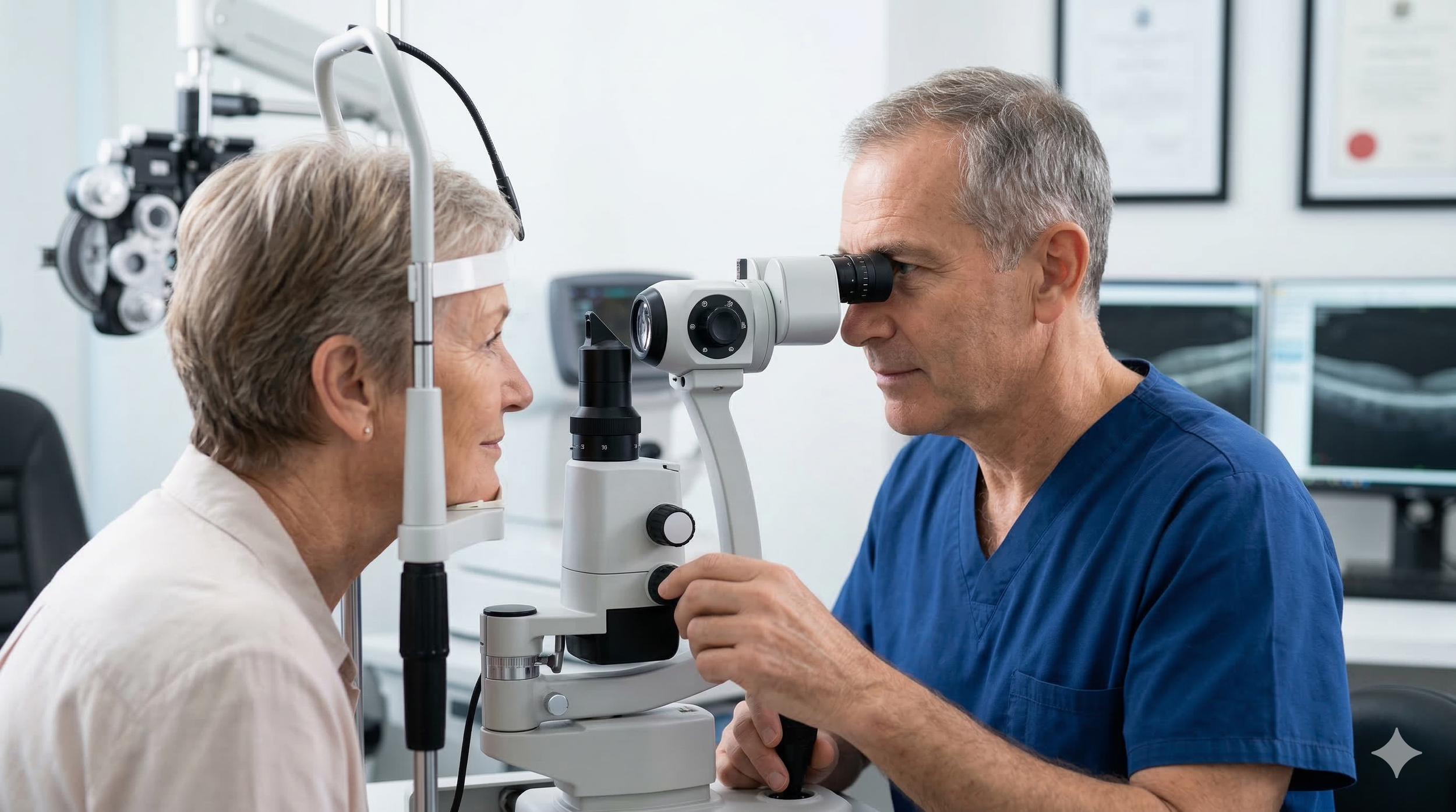
A slit lamp examination to look closely at your lens and check for clouding
Sometimes dilating drops are used so the Optometrist can look at the back of the eye as well.
If cataracts are present and are interfering with your life, your Optometrist will arrange a referral for a specialist cataract consultation in Sydney. A referral from your GP lasts for twelve months, while a specialist referral from an Optometrist is valid for three months, and having this referral in place is essential so you can claim the full Medicare rebate when you see an Ophthalmologist.
Your Optometrist also measures the severity of the cataract, assesses how much it is affecting your daily life, and advises on when the right time might be to consider surgery. They will then direct your referral to your chosen cataract specialist so you can move to the next stage with confidence.
What happens if cataracts are left untreated
It helps to know where this is heading if you do nothing. Cataracts usually worsen slowly over the years, which means your sight may gradually become more blurred, colours may become duller, and tasks such as reading, driving, or recognising faces may become much harder.
If cataracts are not treated, over time, you may
Struggle more with night driving, steps, and low light
Find reading, cooking, and hobbies increasingly difficult
Lose some independence as daily tasks become less safe
Cataract surgery is very effective even in later stages, but life is easier when you act earlier, before vision loss becomes severe and starts to limit your daily routine.
Step 3: Booking your specialist cataract consultation
Once you have your referral, the next step is to book your cataract consultation in Sydney with The Cataract Clinic. This visit is more detailed than a regular eye test and is focused on planning your treatment and answering your questions about surgery and recovery.
During this appointment, your specialist will usually
Review your history and symptoms and repeat key vision tests
Carry out advanced measurements, such as biometry, to plan your Intraocular Lens
Talk with you about your lifestyle and goals for your vision after surgery
You can make your visit smoother by bringing
Your referral letter from the Optometrist or GP
Your Medicare card and any private health fund details
A list of all current medications, including eye drops
In the private system, you have a choice about where you go for cataract care. The Cataract Clinic offers specialist expertise, up-to-date technology, and a calm, supportive setting so you feel informed and comfortable at every stage of your cataract referral pathway in Sydney. This is where your plan for a clearer vision really takes shape.
After your cataract procedure
Many people want to know what happens after surgery before they even book their first consultation. Most patients notice a real improvement in clarity within days, although it may take a little longer for the eye to settle fully and for colours and contrast to feel natural again.
After cataract surgery, you can usually expect
Mild grittiness or light sensitivity that eases over a short period. Follow-up visits to check healing, eye pressure, and your new vision
A later visit with your Optometrist for ongoing care and any new glasses if needed
These follow-up appointments allow the team to ensure everything is on track and provide you with clear guidance on returning to driving, work, and sport.
FAQs
Is my vision blurry from cataracts or another problem?
Cataracts can cause blurred or cloudy vision, but they can also be linked to other eye conditions, such as macular changes or dry eye. If straight lines look hazy, light seems too bright, or you struggle with glare from night driving in Sydney, these may be early signs of cataracts that your Optometrist can confirm or rule out.
How long does it take to get an Optometrist referral for cataract surgery in Sydney?
Many Optometrists can see you within days, and once your cataract has been confirmed and a referral written, you can book an appointment at The Cataract Clinic straight away. This means you can move from worrying about the first signs of cataracts in Sydney to having a clear plan quite quickly.
What should I expect at a cataract consultation?
At your cataract consultation in Sydney, you can expect vision testing, a detailed eye examination, and advanced scans and measurements to plan your Intraocular Lens. You will also have time to ask questions about the operation itself, the recovery period, and when you can return to your regular daily tasks.
Can I claim Medicare for cataract surgery?
Yes, with a valid referral from your GP or Optometrist, you can usually claim a portion of your consultation and surgery fees under Medicare. The team at The Cataract Clinic will explain all costs in clear terms before you go ahead, and can also guide you on how your private health cover may apply.
Ready to move from blurry vision to clear sight and take the next step for the first signs of cataracts in Sydney?Click here to Book Your Cataract Assessment Consultation with The Cataract Clinic now.